

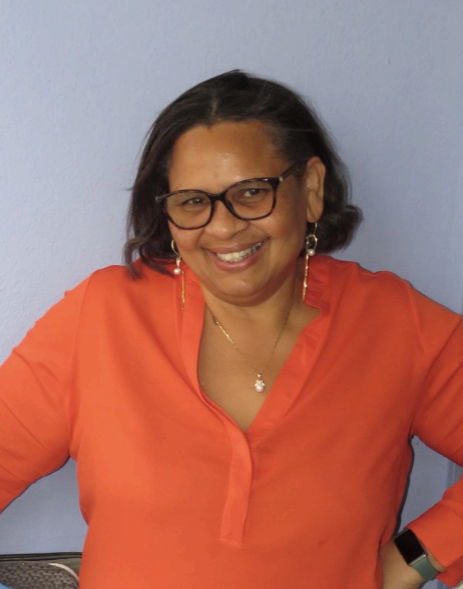
- 2026 Awardees
General
Born 06/07/1971
Married
Positions Held
Secretary III 06/08/1990 to 30/06/2013
Assistant Clerk of Court 01/07/2013 to 31/08/2017
Clerk of Court 01/09/2017 to 06/06/2026
Diana Victoria Hendy
Born on June 7, 1971, in Belize City to Fautina and Gerald Gillett, Diana was the fourth of seven children. She was raised in a humble family where hard work, honesty, respect, perseverance, and care for others were not simply taught, but lived. These values would become the foundation upon which she built both her career and her life.
Diana understood from an early age that education and hard work could create opportunities. After attending Belize Junior Secondary College, she continued her studies at Belize Technical College, successfully completing Business Studies in 1990. During this period, she also completed a certificate program in Computer Studies—an accomplishment that would unexpectedly shape the course of her professional life.
On August 6, 1990, Diana began her career at the Belize City Magistrate Court as a Clerk Typist. She entered the Court at a time when its operations were largely dependent on handwritten court books, paper files, and manual processes. As a young woman fresh out of school, she arrived eager to learn, willing to work, and determined to make a meaningful contribution.
Then came an opportunity that would change the Magistracy forever.
The Court received a donation of its first computer. For months, the computer remained covered and unused. While others may have simply seen a piece of equipment, Diana saw possibility. She approached her supervisor and asked for permission to use it.
That simple request became the beginning of a remarkable journey.
Diana envisioned a way for information traditionally recorded in court books to be stored electronically, organized more efficiently, and accessed more easily. With the assistance of her colleague, Mr. Roy Griffith, and Mr. Charles Ewens, a public officer and program developer at the Customs Department, she began working to turn that vision into reality.
Together, they developed a computer program designed to generate the Court's weekly calendar from information recorded in the Court books. There was no ready-made system waiting for them. They had to create, test, correct, and refine the process themselves.
Diana worked closely with Mr. Ewens and Mr. Griffith, often remaining at work long after the normal working day had ended. Their perseverance eventually produced a historic achievement: in 1995, the Belize City Magistrate Court generated its first computerized Court Calendar.
That accomplishment represented far more than the successful introduction of a computer program. It represented innovation, courage, teamwork, and a willingness to embrace change at a time when change was not always readily accepted.
Diana was subsequently offered the position of the Court's first Data Entry Clerk. She was told that the position was considered a "dead-end" post. Yet Diana was not motivated by titles, prestige, or financial reward. She was motivated by a vision and by the desire to see that vision succeed.
She accepted the challenge.
There were sacrifices. She worked long hours without compensation and without receiving time off for the additional hours she devoted to the project. She faced criticism and heard negative comments from those who did not understand what she was trying to accomplish.
But she persevered.
She believed in the work. She believed in the vision. And, most importantly, she believed that the Court would one day benefit from the changes they were making.
Over the years, Diana witnessed and participated in three upgrades to the computerized system. What began with a single computer sitting covered in a corner evolved into an important, computerized component of the Court's operations. Her contribution helped the Magistrate Court move from a predominantly paper-based environment into the technological age, with the impact of that transformation extending beyond the Magistrate Court and contributing to developments within the wider justice system, including the High Courts of Belize.
Her professional journey continued to evolve.
From Clerk Typist, Diana was promoted to Secretary, then became the first Data Entry Clerk, advanced to Assistant Clerk of Court, and ultimately attained the position of Chief Clerk of Court.
Each promotion represented not merely advancement, but the recognition of her knowledge, experience, dedication, and capacity to serve.
As Chief Clerk of Court, Diana became a seasoned administrator, mentor, leader, and custodian of institutional knowledge. During her career, she had the distinction of serving under nine Chief Magistrates, witnessing changes in leadership, court administration, technology, and the delivery of justice.
Her decades of service gave her a unique perspective on the evolution of the Magistracy. She became a bridge between generations of judicial officers, court staff, public officers, and members of the public. Through every transition, she carried with her the experience and institutional knowledge accumulated over 35 years.
Yet Diana's legacy extends beyond her professional accomplishments.
In 1997, she met Vallan Hendy, and in 1999 they were married. Together, they welcomed two children, their son Vallan Jr. and daughter Alexandra. They also raised Diana's nephew, Gerald Gillett, as their own, creating a loving family of five.
Balancing family responsibilities with a demanding career required sacrifice, patience, determination, and love. Diana and Vallan sought to instill in their children the same principles that had guided their own lives: humility, integrity, hard work, respect, and perseverance.
For Diana, true success has never been measured solely by material wealth. She believes that a person's greatest richness can be found in the lives they touch, the respect they earn, the family they raise, and the difference they make in their community.
That philosophy has also defined her approach to public service.
Diana firmly believes that public service is service to the public. She believes that every person who enters the Public Service assumes a responsibility to treat members of the public with dignity, patience, compassion, and respect.
Her concern for senior citizens is particularly heartfelt. Having spent their lives contributing to the development of Belize, they deserve to be treated with patience and dignity. They deserve to know that their contributions matter.
To young public officers, Diana leaves an equally important message: a position in the Public Service is not simply a job. It is a responsibility. The young officers of today will become the people entrusted with serving the nation tomorrow. Their integrity, professionalism, humility, compassion, and respect for others will determine the strength of the Public Service for generations to come.
As Diana now brings her 35-year career to a close, it is fitting to reflect on just how far she has travelled.
She entered the Magistracy as a young Clerk Typist in 1990.
She became the first Data Entry Clerk.
She helped pioneer the computerization of the Court's weekly calendar.
She worked through technological changes and three system upgrades.
She progressed through several positions of increasing responsibility.
She served under nine Chief Magistrates.
She became Chief Clerk of Court.
And throughout it all, she remained committed to serving the institution, her colleagues, the judiciary, and the people of Belize.
Her greatest legacy, however, may not be a title or a computer system. It is the example she leaves behind.
Diana's career reminds us that one does not need to occupy the highest position to make a significant difference. One does not need to become wealthy to be successful. One does not need constant recognition to know that one's work has value.
Sometimes, success is simply knowing that you gave your best.
Sometimes, wealth is the respect earned through a life lived with integrity.
And sometimes, a legacy is the positive change that remains after you have moved on.
Diana saw an unused computer and recognized an opportunity. She had a vision when others could not yet see it. She found people willing to work with her. She sacrificed her time, endured criticism, embraced challenges, and refused to give up.
Her story is therefore one of service, innovation, perseverance, leadership, family, and integrity.
As she retires, Diana can look back with pride knowing that she gave 35 years of her life to the service of Belize. She leaves the Magistracy knowing that she helped open the door to technological advancement, contributed to the modernization of court operations, supported generations of colleagues and judicial officers, and helped create a stronger foundation for the administration of justice.
Most importantly, she leaves knowing that she made a difference.
To Diana Victoria Hendy, we extend our deepest gratitude for your years of faithful service, your dedication to the Magistracy, your willingness to embrace change, and your unwavering commitment to doing what you believed was right.
Thank you for showing us that a vision can become reality when it is supported by determination.
Thank you for demonstrating that perseverance can overcome doubt and criticism.
Thank you for reminding us that true success is not always measured by what we gain, but by what we give.
And thank you for a lifetime of service to the people of Belize.
As you begin this new chapter, may you enjoy the rewards of your years of hard work. May you have time to cherish your family, pursue your dreams, and enjoy the peace and fulfillment that come with knowing you have served your country with pride, dignity, and integrity.
Your career was more than a job.
It was a journey of service.
It was a journey of perseverance.
It was a journey of faith in a vision.
It was a journey of family.
It was a journey of integrity.
And most importantly, it was a journey that left a mark.